Find design faults ERC and DRC don't see.
Probe reviews the board design (ODB++) and surfaces intent and behaviour faults. The review runs with AI in your own tool — Probe shows the cited evidence in the browser. Click the findings below and see them pointed out on the board.
Self-hosted · No generative AI · Your design never leaves your network
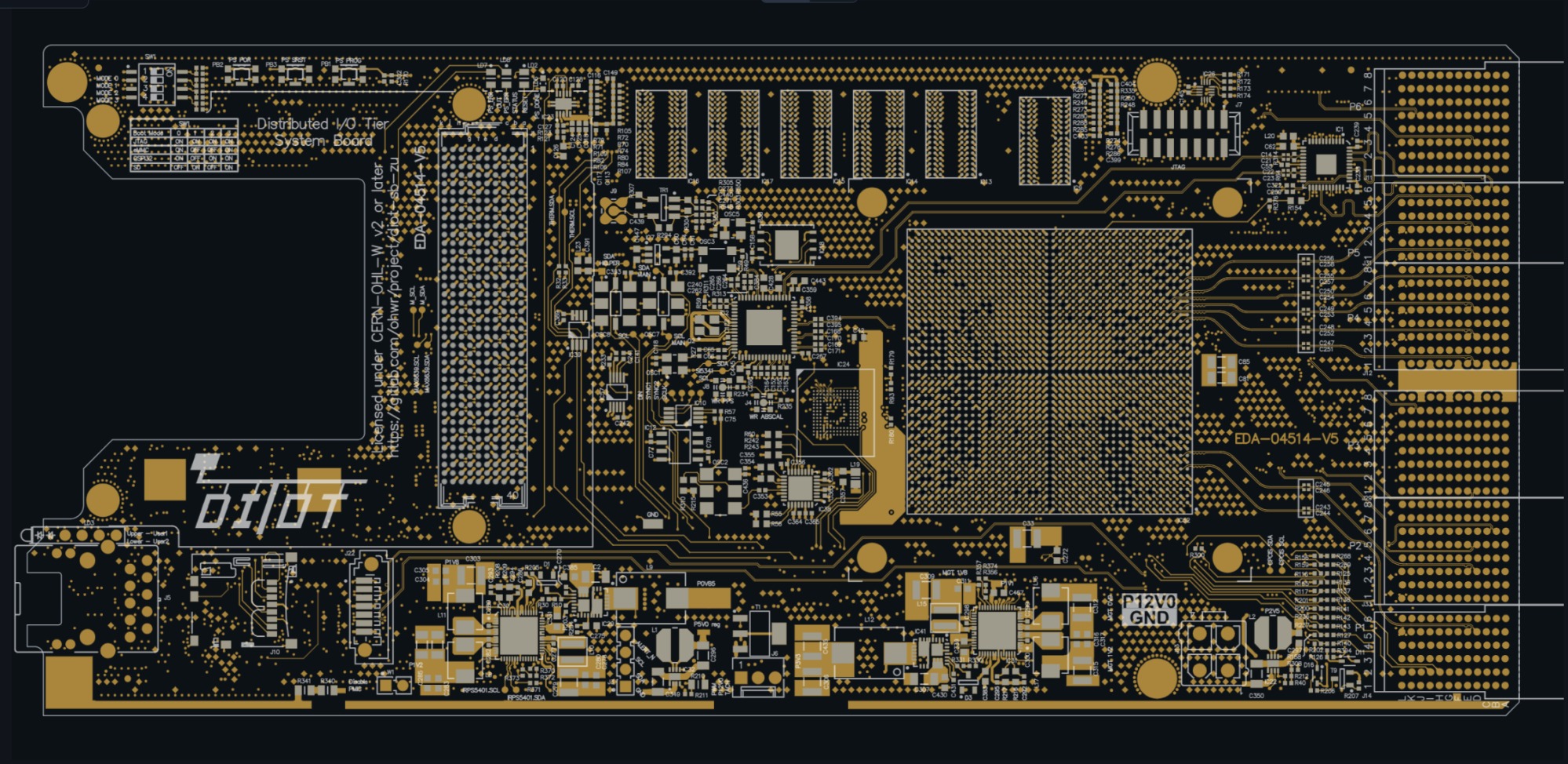
- 1 Supply and ground pin on the same netGND · IC30.22 ↔ IC48.3
- 2 Reset released on P3V3 aloneIC27 · PS_POR_B
- 3 USB-JTAG overrides the reset supervisorIC4 · PS_SRST_B
- 4 Crosstalk follows out onto the connectorETH_RX_CTL → SLOT2.LVDS_2_N
- 5 I²C mux obsolete — none left to buyIC6 · PCA9548APW
- 6 Inductor outside the datasheet LC tableIC22 · TPS62125
Supply and ground pin share the GND net
The net GND ties together a supply pin (IC30.22) and a ground pin (IC48.3) — a direct short. Neither ERC nor DRC reacts, because both pins are allowed to be called GND.
Real findings from the published review of CERN's DI/OT Zynq UltraScale+ System Board (OHWR0083 R5) — see the full review. Open hardware, CERN-OHL-W-2.0.
88 open CERN designs, read by Probe
Probe has reviewed designs published on the CERN Open Hardware Repository — layout, schematic and every component's datasheet together. Every finding is out in the open with the evidence behind it. Nothing invented: browse it yourself.
The designs are owned by their authors and published under CERN-OHL. Probe is operated by E# (E-Sharp AB).
Intent and behaviour faults, not rule violations
Probe surfaces faults that rest on intent, datasheets and lifecycle — the kind ERC and DRC can't catch.
Every finding points to a net, a layer and a component — and rests on a source you can look up: datasheet, pin function or netlist. The whole chain of evidence is presented, and Probe never guesses: if a claim can't be backed, it isn't raised.
Probe doesn't replace ERC, DRC or DFM — it complements them. ERC and DRC show the design is legal and manufacturable; Probe reviews whether it's right.
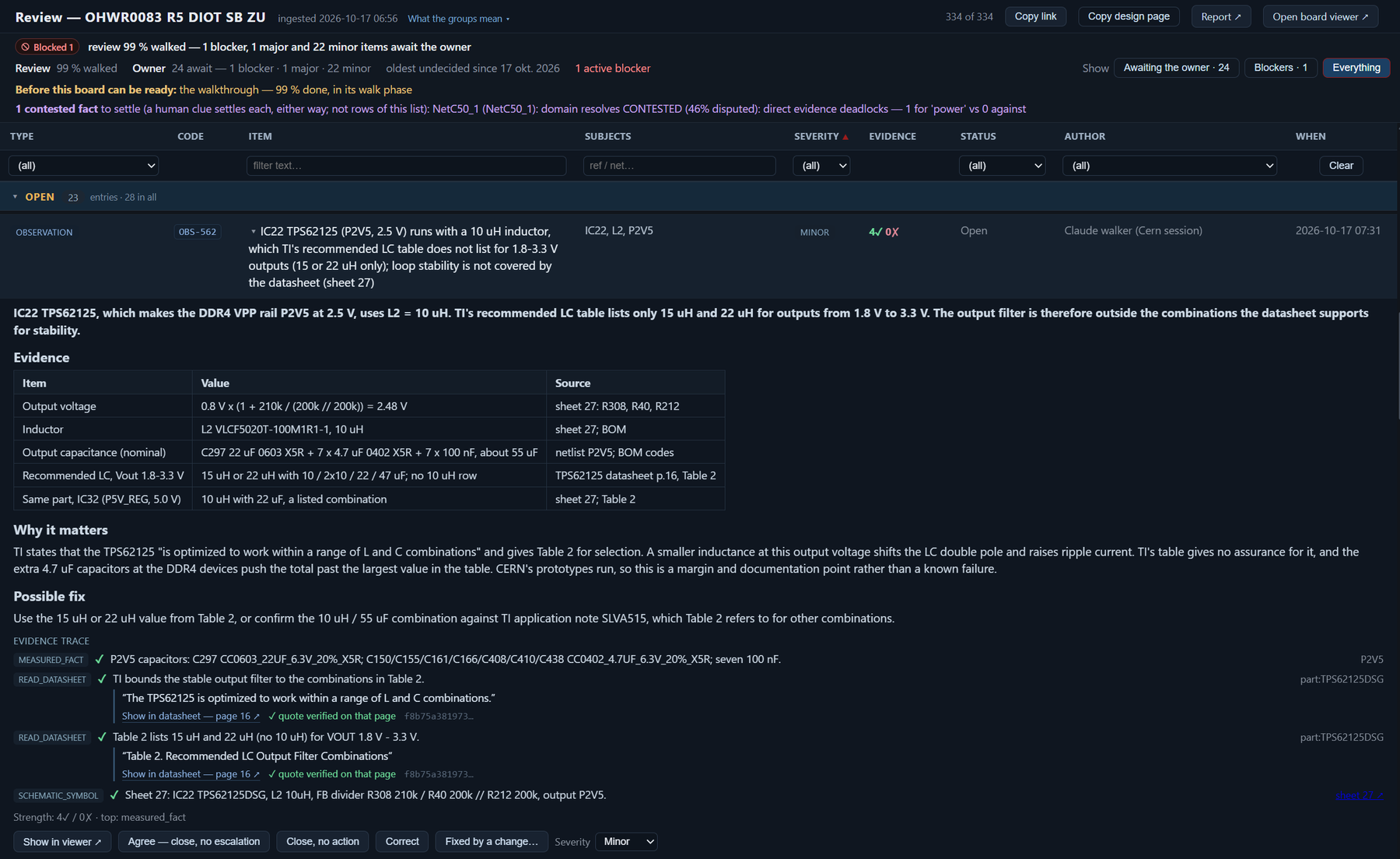
A selection of what Probe finds:
Get the answer — grounded in the board's own data
During bring-up and firmware you rarely need the whole schematic — you need an answer. Ask the board in plain English: pin states, I²C addresses, boot mode, how to program a part. Probe answers grounded in the netlist, datasheets and BOM — with citations — and warns about findings related to what you're asking.
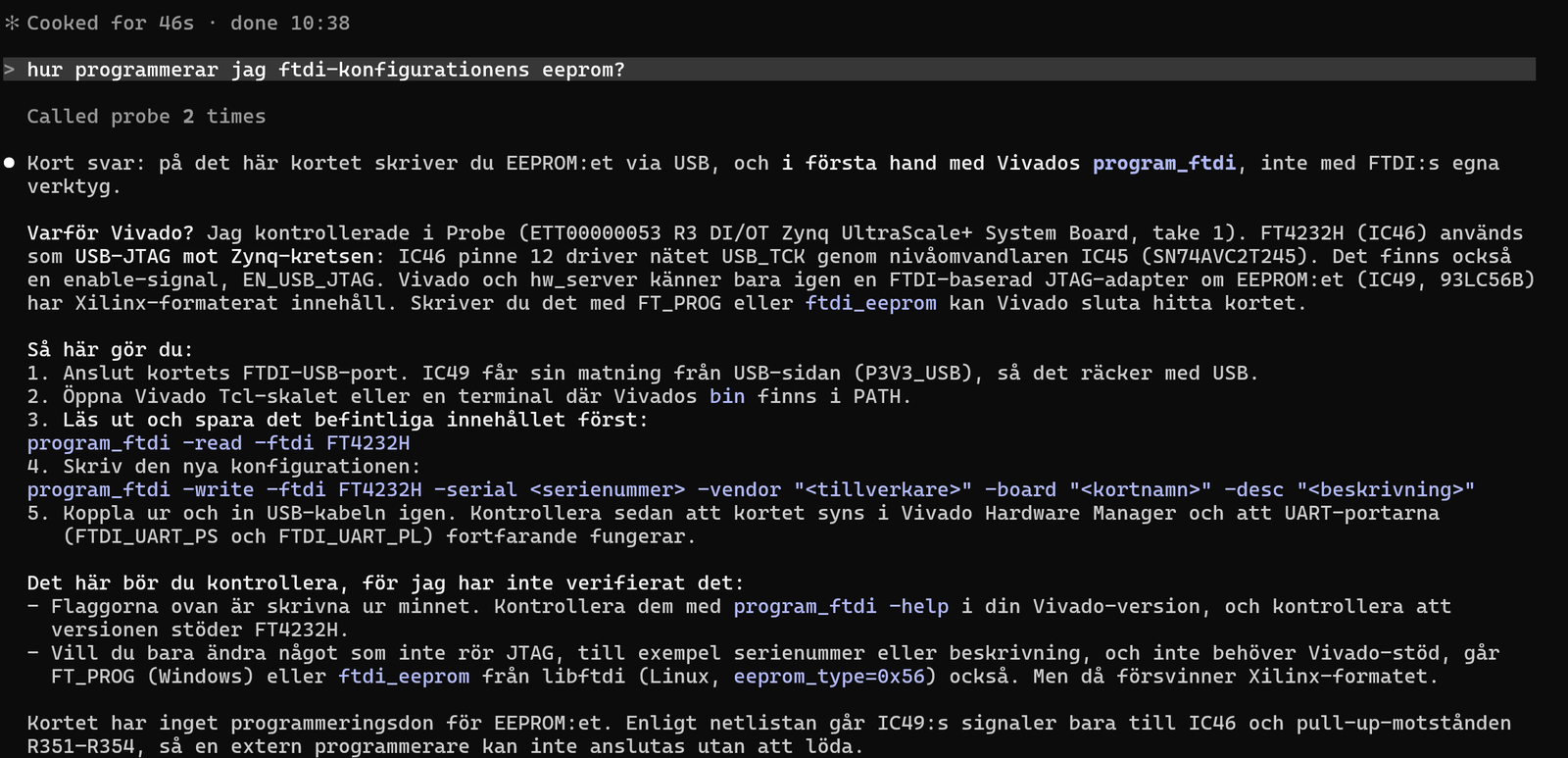
A real question in the terminal: Probe is called, the answer is grounded in netlist and datasheet — and honest about what isn't verified. Click to read.
Make the review pay for itself
An intent or behaviour miss is often found first in bring-up — after a respin. Industry studies put a respin at $28,000–46,000 and around 16 days of lead time. Probe moves the finding to the review, before layout and manufacturing: a review seat costs a fraction of a respin.
Licence per review seat. Looking at a review is free — view seats cost nothing.
Your design stays on your network
Probe is self-hosted — ODB++, netlists, BOMs and schematics live in your own database. Probe contains no generative AI model and never calls one; the review runs in your own tool under your own vendor agreement.
Open the board — whatever the ECAD
Probe reads the netlist, not a specific layout view. An ordinary reviewer shows shapes; Probe knows what they're connected to. The board opens in Probe's browser — in schematic, 2D and 3D — whether it comes from KiCad, Xpedition/PADS, Allegro, Altium or OrCAD.
It's the same model all the way: highlight a net in the schematic — here USB2_DM — and see the exact same net light up in 2D and 3D. Cross-probing between schematic, layout and board.
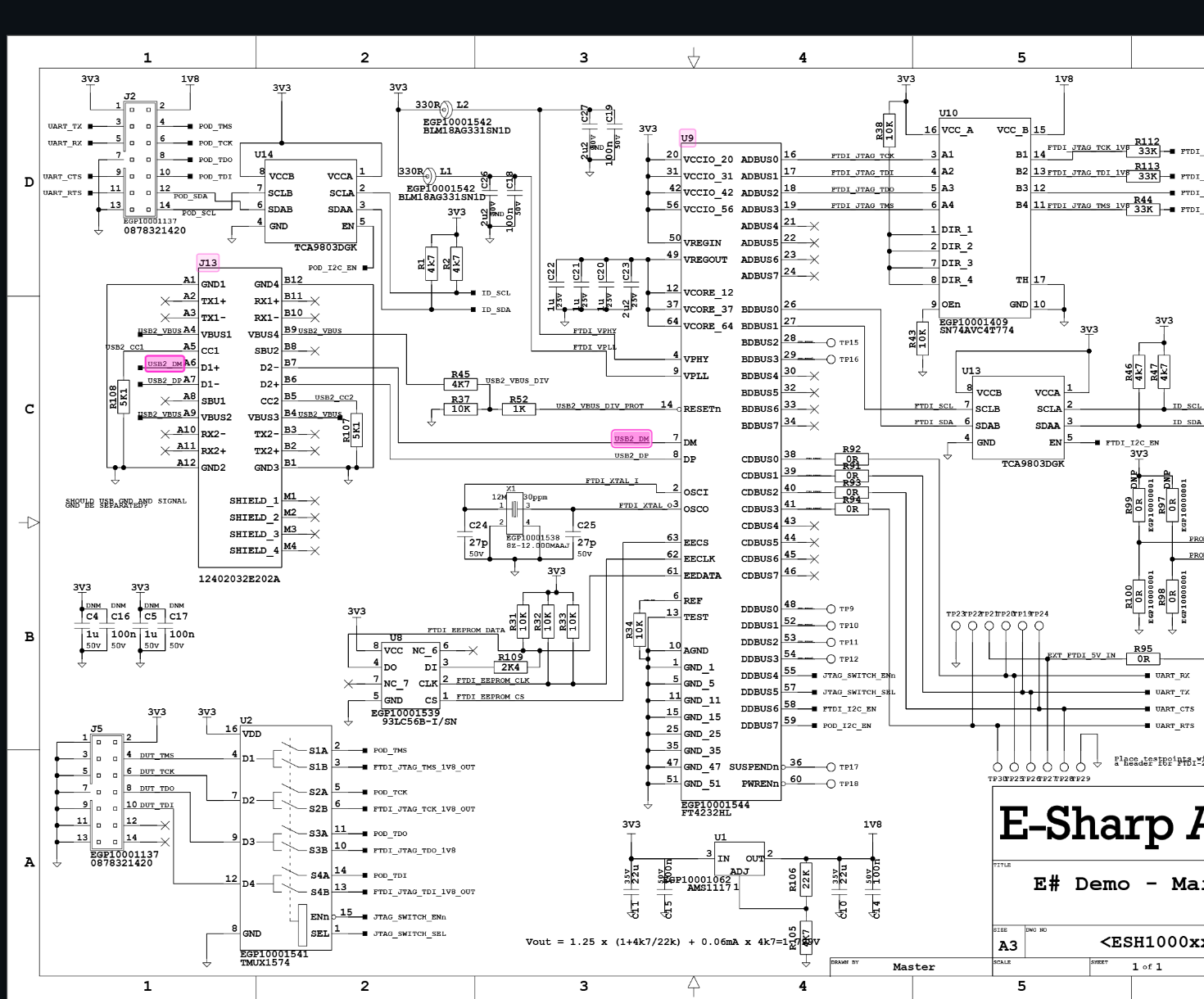
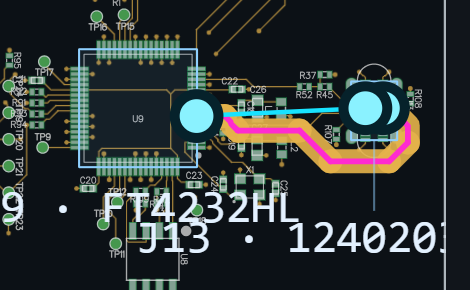
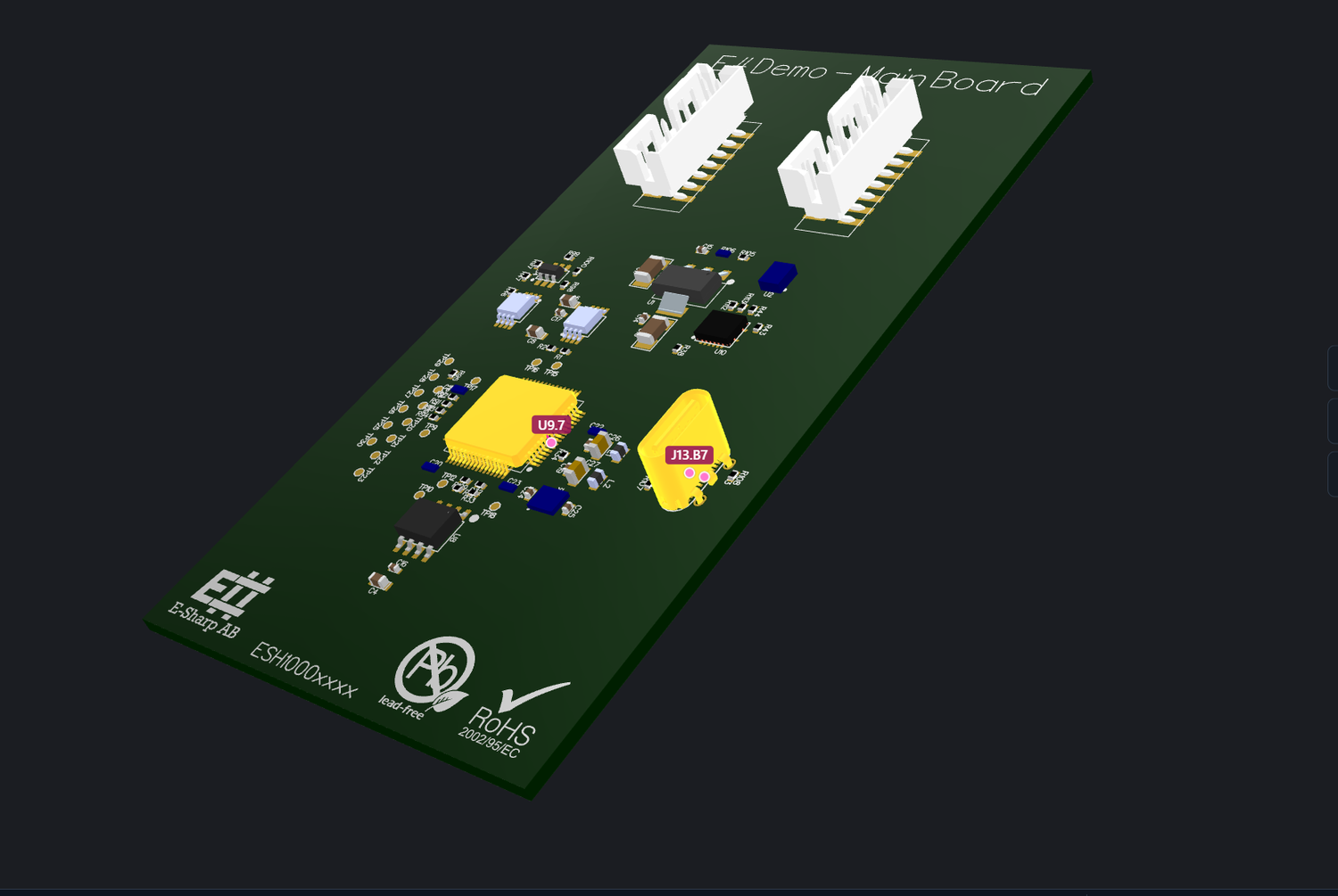
The net USB2_DM in schematic, 2D and 3D. Click to enlarge. E#'s own demo board.
Questions we get
Do I have to send you the boards?
No. You run the review yourself in your own environment. E-Sharp doesn't review your boards for you.
What happens to my data, and where is it stored?
Design data lives in your own PostgreSQL database and your file volumes. Nothing is sent to E-Sharp. See Security & data handling.
Is it self-hosted, or does it run with you?
Self-hosted — on-premises is recommended for sensitive IP. An evaluation can run on a server we host in Azure (Sweden Central), which is deleted when the evaluation ends.
Does Probe replace ERC and DRC?
No, it complements them. ERC and DRC prove the design is legal and manufacturable; Probe reviews whether it's right — intent, function and behaviour.
Which ECAD tools and file formats are supported?
Probe reads the neutral ODB++ export — or schematic and BOM before layout. Verified exporters: Xpedition/PADS, Allegro and KiCad. Other ODB++ exporters on request.
Do you run the review for us?
No. The review runs with AI in your own tool; Probe presents the cited evidence. You run it yourself.
How does sign-in (SSO) work?
OpenID Connect with PKCE against your Microsoft Entra ID or Okta tenant.
Which AI tool is needed, and what does it cost?
An MCP-capable assistant (Claude or Copilot) with your own vendor key — no AI fee from us. Licence per review seat; view seats are free. See Pricing.
Three tools that weave the board's path together
Review the design, verify in test, and hold requirements and traceability together. Probe is the entry point.
Design review of boards (ODB++) that finds intent and behaviour faults before manufacturing.
- Return paths & reference planes
- Decoupling & PDN
- Testability
See Probe on your own design.
Book a demo or run a review on an evaluation board. You run the review yourself — we don't review your boards for you.