Thermal management on advanced FPGA systems
An in-house thermal-chamber investigation of a data-centre-class FPGA system under load — finding where it runs hottest, where it overheats, and what to change.

A customer wanted to know whether a data-centre-class FPGA system could keep itself cool under heavy computational load. Earlier work had covered simulations and calculations on parts of the system; this project started with real-world measurement. The customer is not named here.
The challenge
Simulation tells you what should happen; it does not tell you how a specific build behaves in a real airflow, at a real ambient temperature, with a real number of FPGAs loaded. The customer needed measured data across those conditions to trust the system’s cooling margin — and to know where it would fail first.
The approach
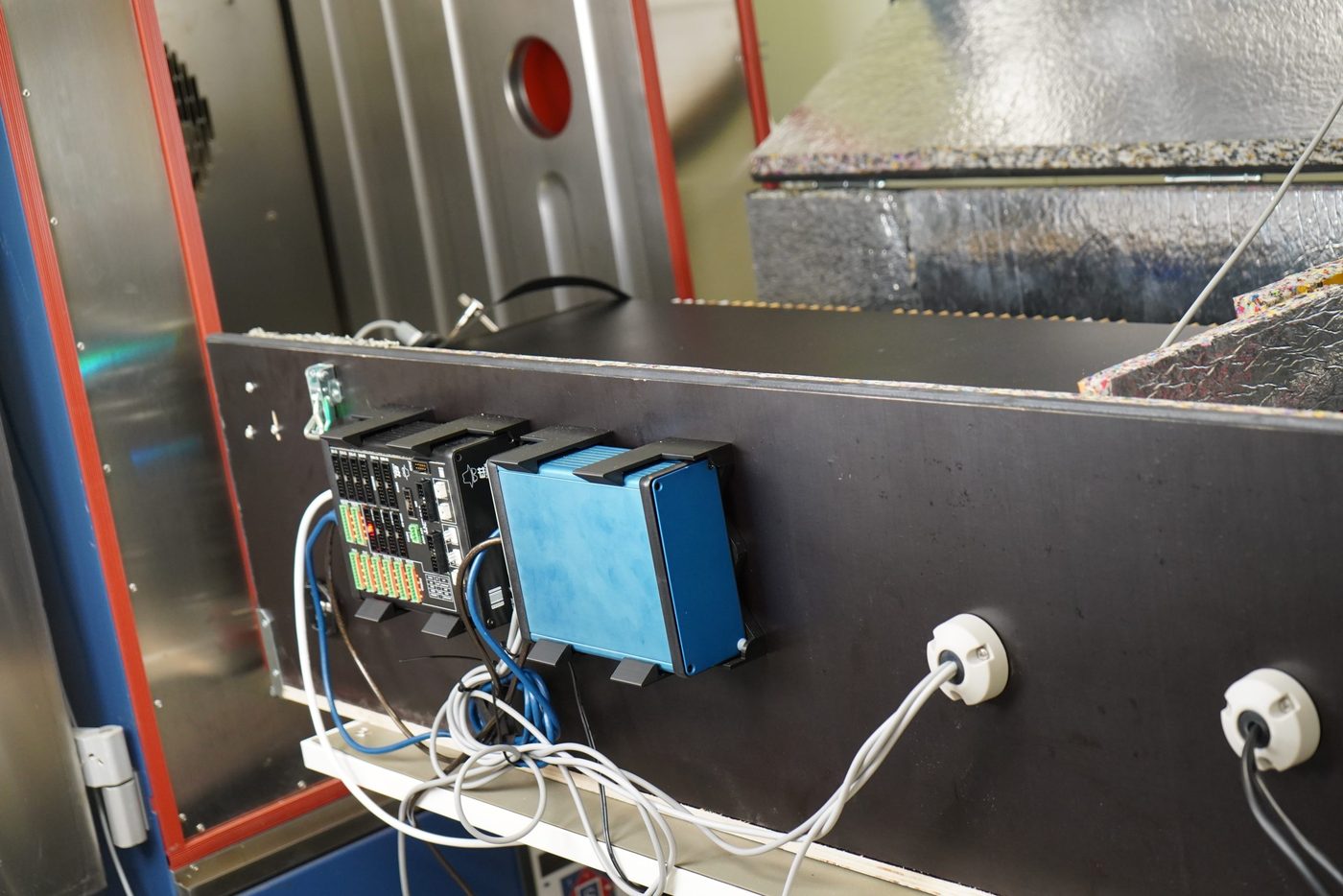
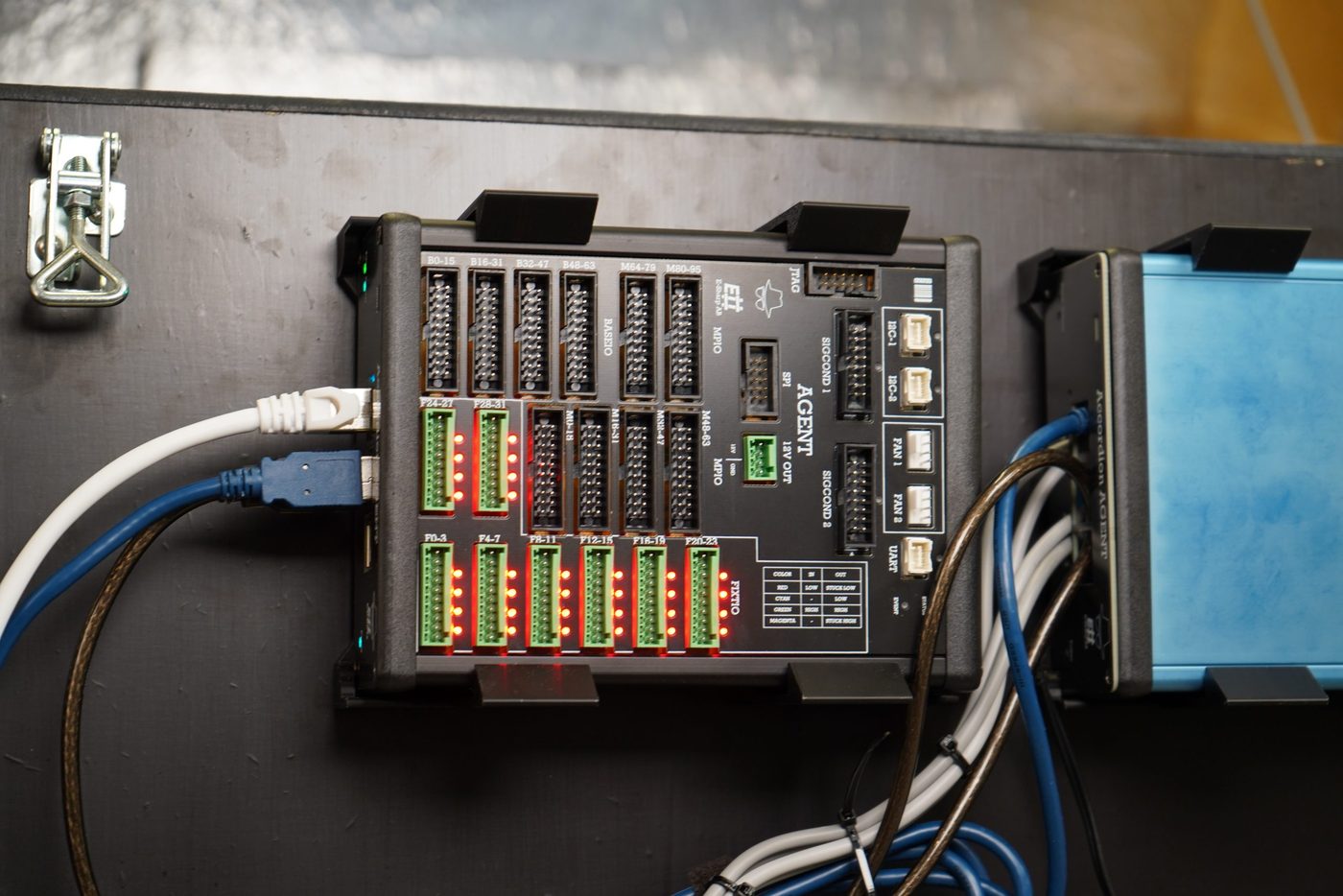
E-Sharp built a climate chamber with an active thermal section and passive intake and exhaust sections, with eight fans moving air through the system. We varied ambient temperature, the number of loaded FPGAs, orientation and fan configuration. Data came from the system’s own sensors and from external instrumentation, logged to timestamped CSV with real-time plots, and analysed in Python using an Accordion Agent for acquisition.
The result
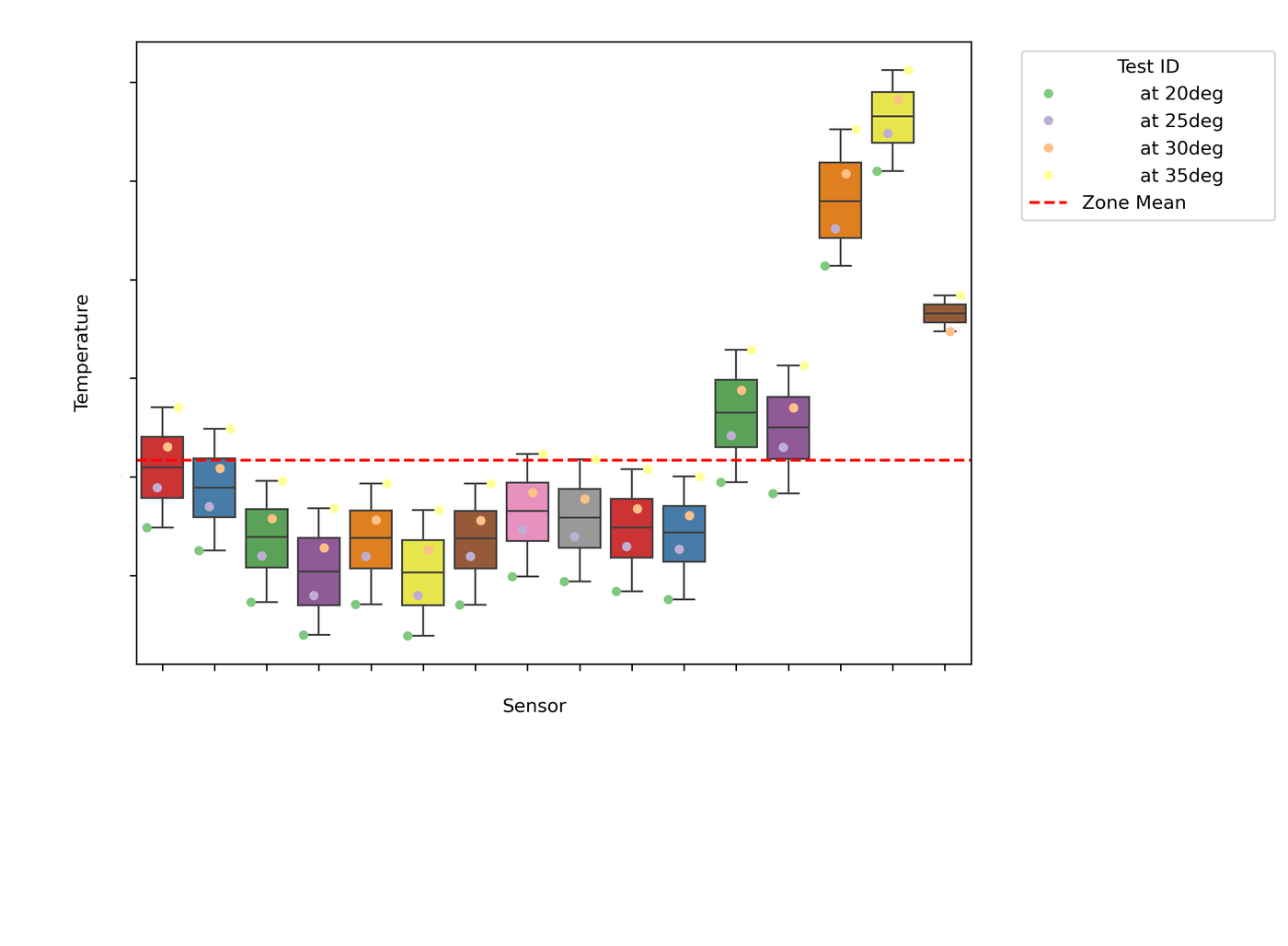
The system handled heavy load across the tested ambient range, running close to its specified temperature limits at the upper end, and overheated above that range. One zone ran consistently hotter than the rest, traced to exhaust heat from a specific component, and FPGAs farther from the air intake ran hotter than those near it. The measurements fed directly into software changes that improved behaviour at high ambient temperatures.
When this fits
This is the right engagement when cooling margin is a real risk and you need measured evidence, not just simulation, before committing a design. It is a verification project with its own rig and instrumentation — worth it when a thermal failure in the field would be costly, and overkill for a product with comfortable margin.
See how we'd approach your product
Tell us what you're building and where it's stuck. We'll say honestly whether we're the right partner — and what a first step looks like.