Accordion A2 Lite
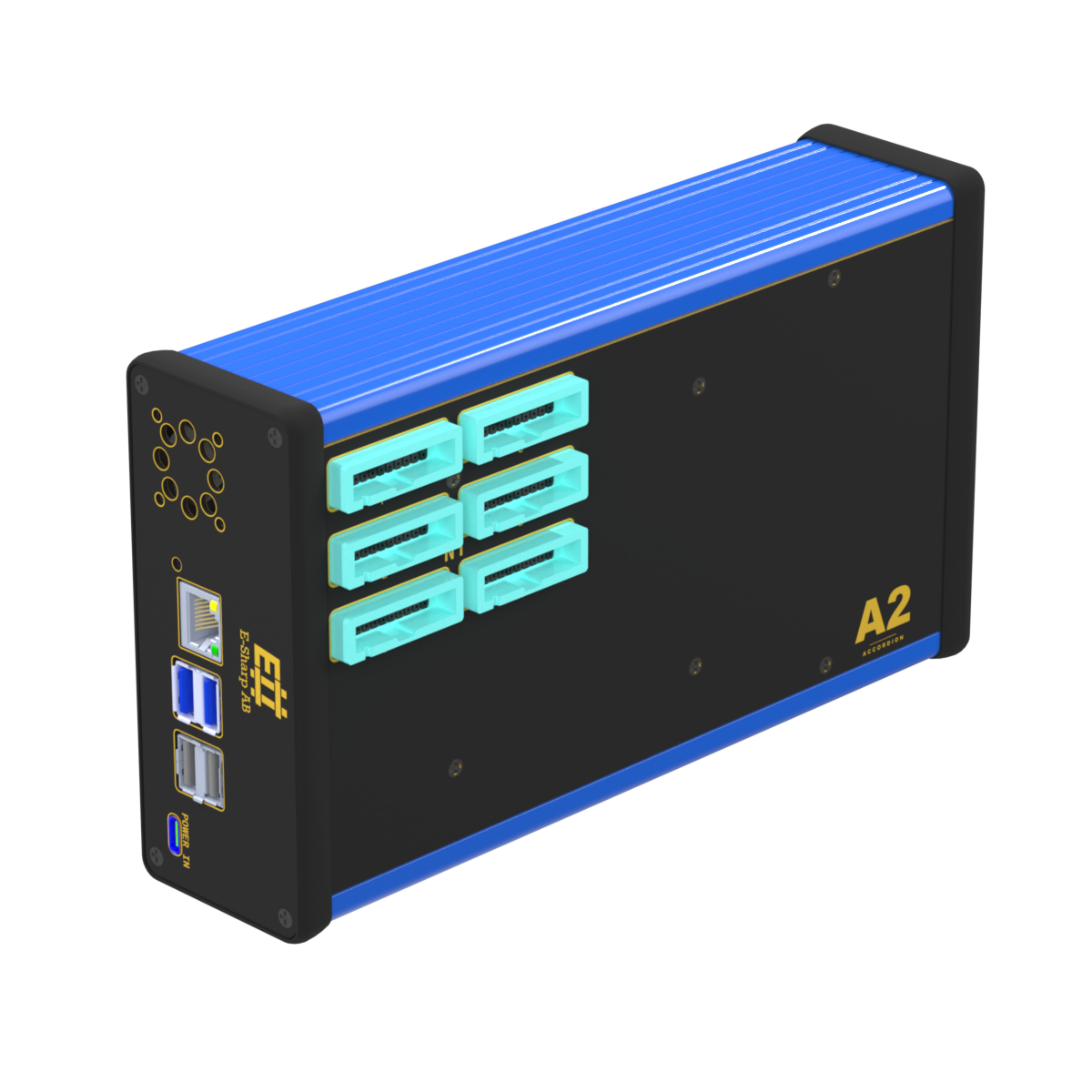
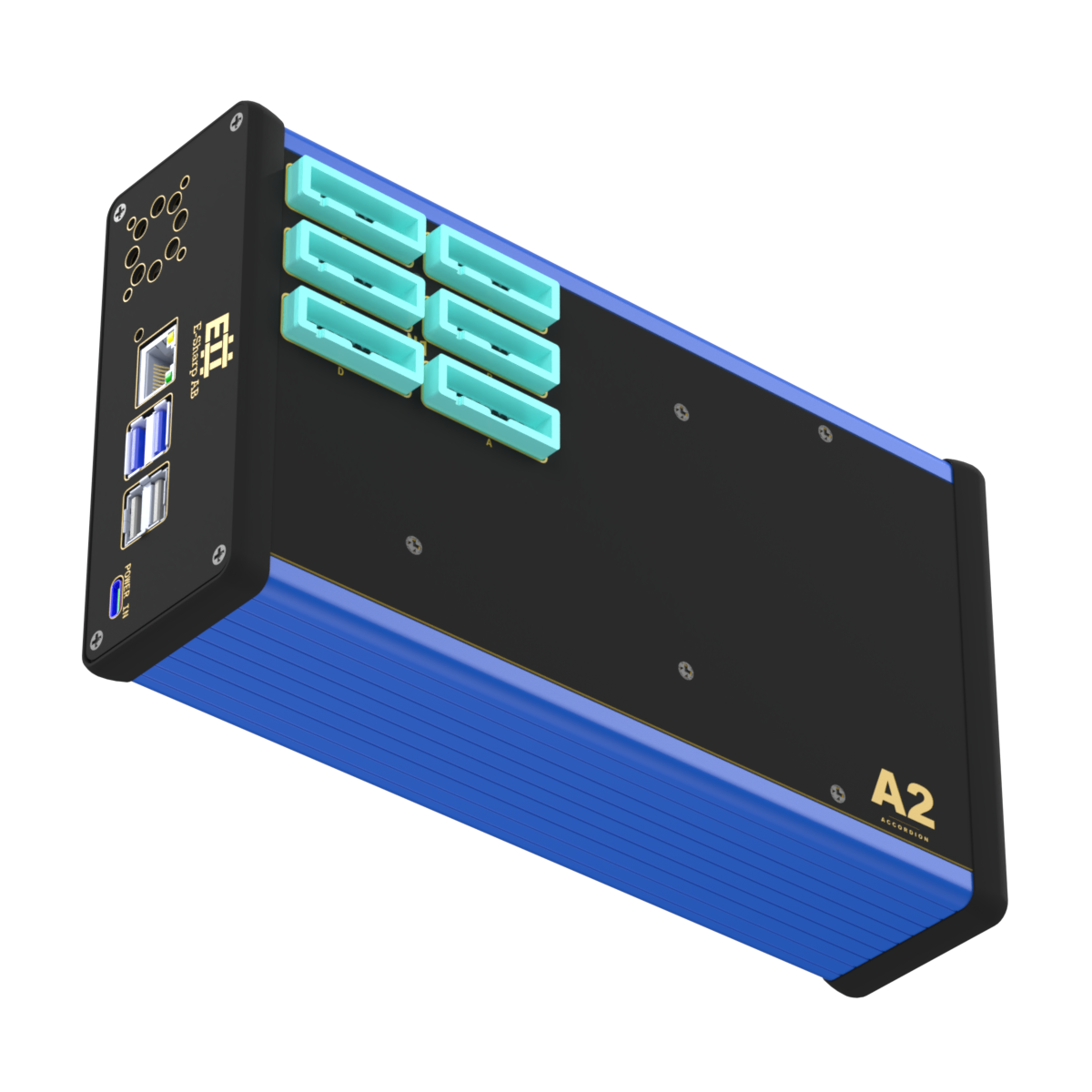
A fully provisioned Accordion A2 node out of the box — connect power and network, install Pilot or Shell and start driving channels.
- 96 mixed-signal channels (MPIO-96) — analogue in/out and pseudo-digital I/O
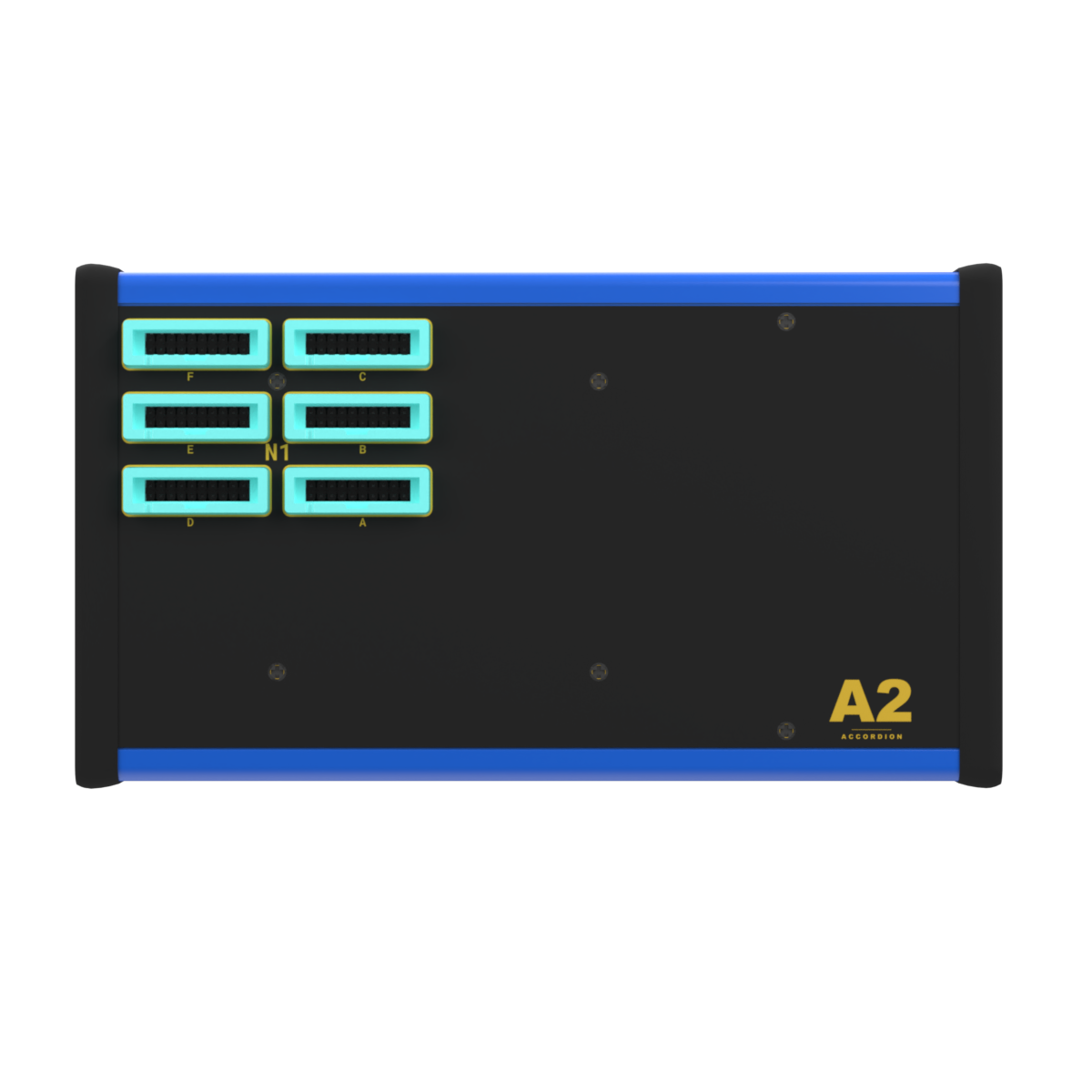
- 96 signals on six 20-pin IDC connectors via the N-TOP breakout
- 12-bit ADC/DAC, 0–5 V typical (AD5592R)
- Networked — Web API, Pilot, Shell, Python, .NET or TestStand
- Lifetime licences for Accordion Pilot and Shell included
Accordion A2 Lite is an entry configuration of the Accordion A2 test platform, delivered as a ready-made bundle for PCBA test, NPI and small-scale production test. The chassis comes pre-assembled with two modules — MPIO-96 and the 6× IDC N-TOP breakout — which together expose 96 user signals to a fixture via standard 20-pin ribbon cable. Larger or mixed instrument configurations (PSU, PoE, audio, battery simulation) are built with more modules on a full Accordion A2.
Modules in the configuration
This comes pre-assembled in Accordion A2 Lite — click for the datasheet, specifications and connections.
Specifications, connections & manual
All technical material on the page — expand a section, or download the whole datasheet as a PDF.
Specifications
System
| Parameter | Value | Notes |
|---|---|---|
| Product name | Accordion A2 Lite | |
| Part number | ESH10000598 | |
| Platform | Accordion A2 | |
| Power input | USB-C (USB-PD), via bundled 130 W power supply | Use bundled supply only. |
| Power consumption, typical | < 5 W | At idle, all channels INPUT. |
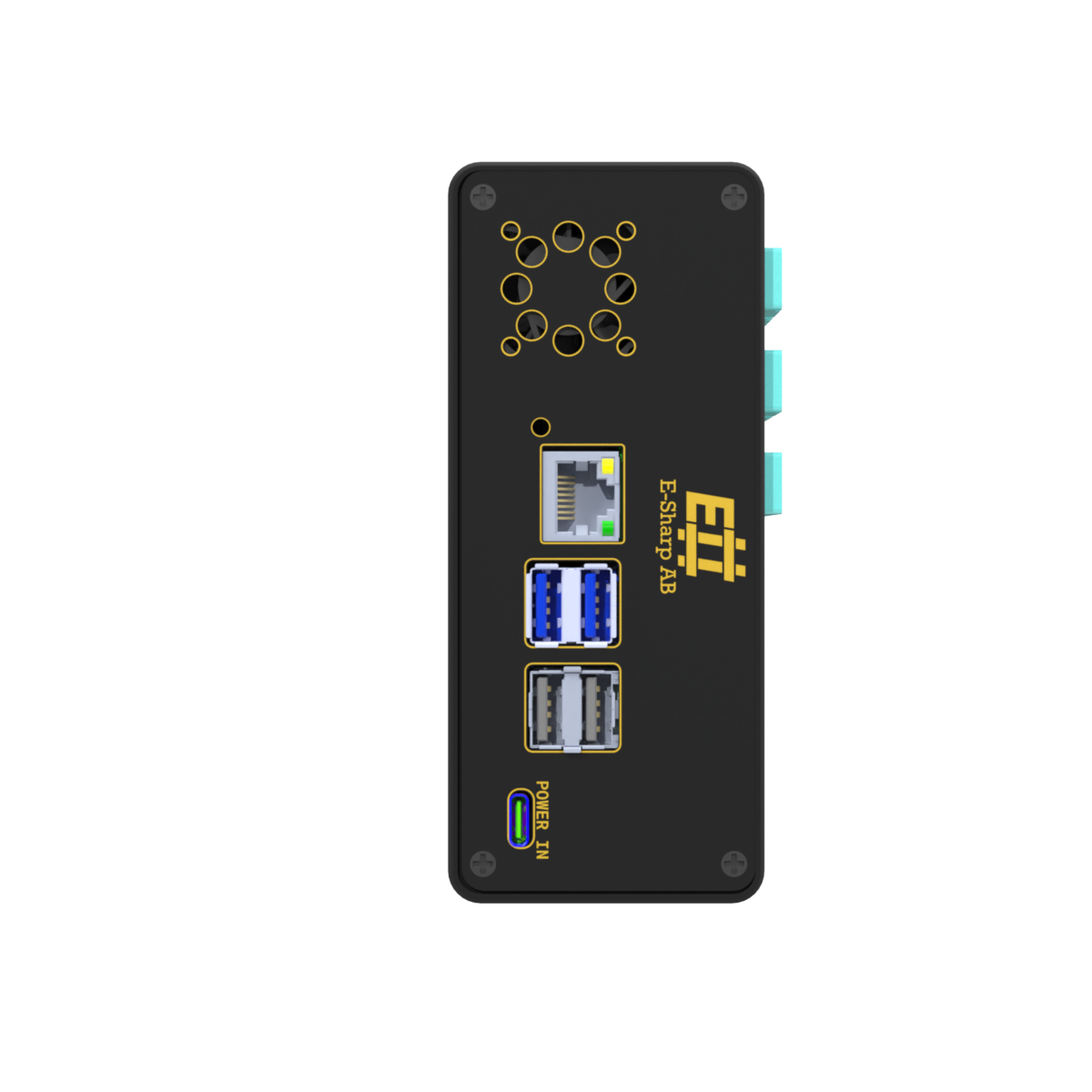
| Network interface | 1× RJ45, 10/100/1000 Mbit/s | Back panel. |
| Auxiliary host ports | 2× USB-A 2.0, 2× USB-A 3.0 | Back panel. |
| Module slots populated | 1× SO-DIMM (MPIO-96), 1× N-TOP (IDC breakout) | See Manual → Hardware. |
| Module slots free | 3× SO-DIMM, 3× N-TOP, 2× M.2 | For future expansion. |
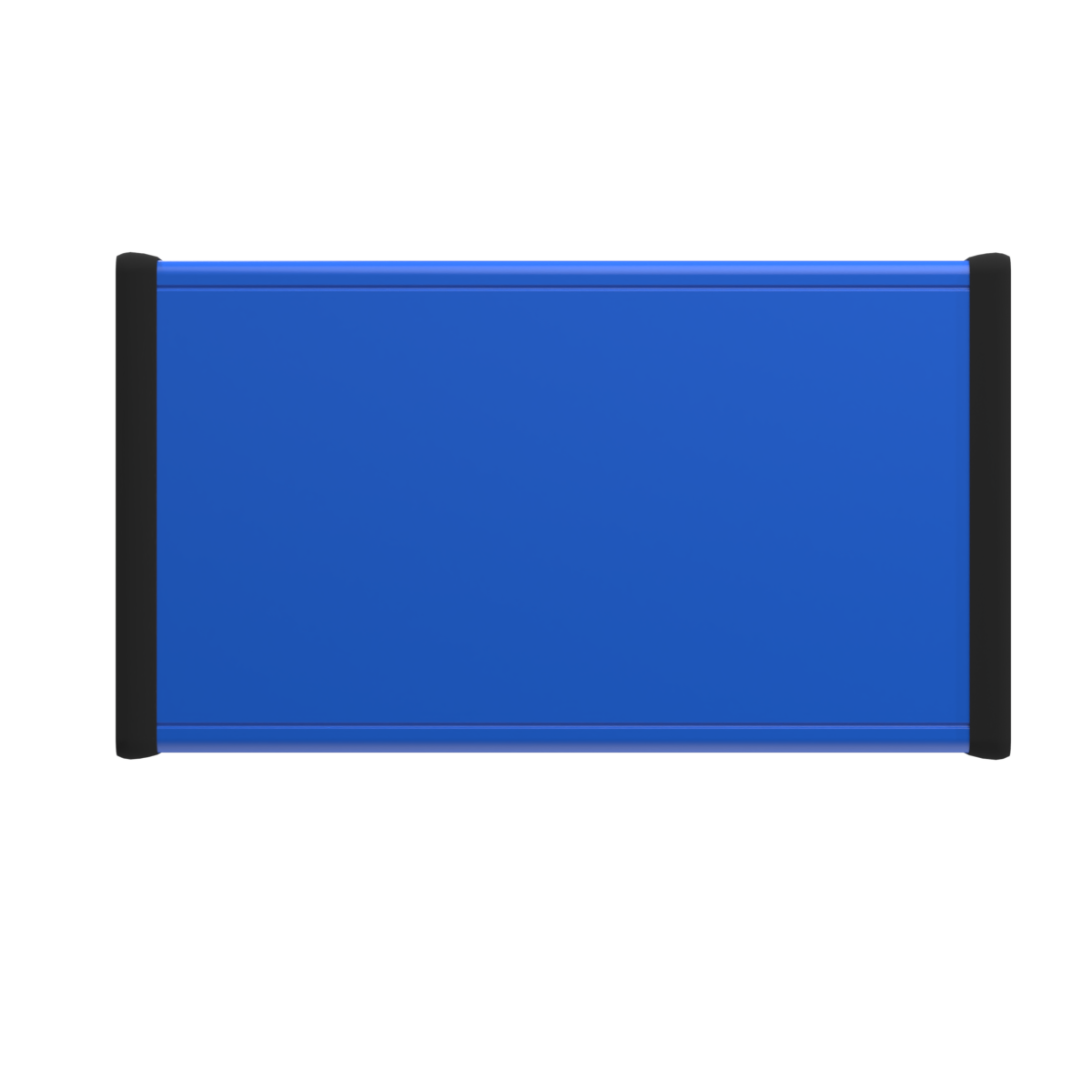
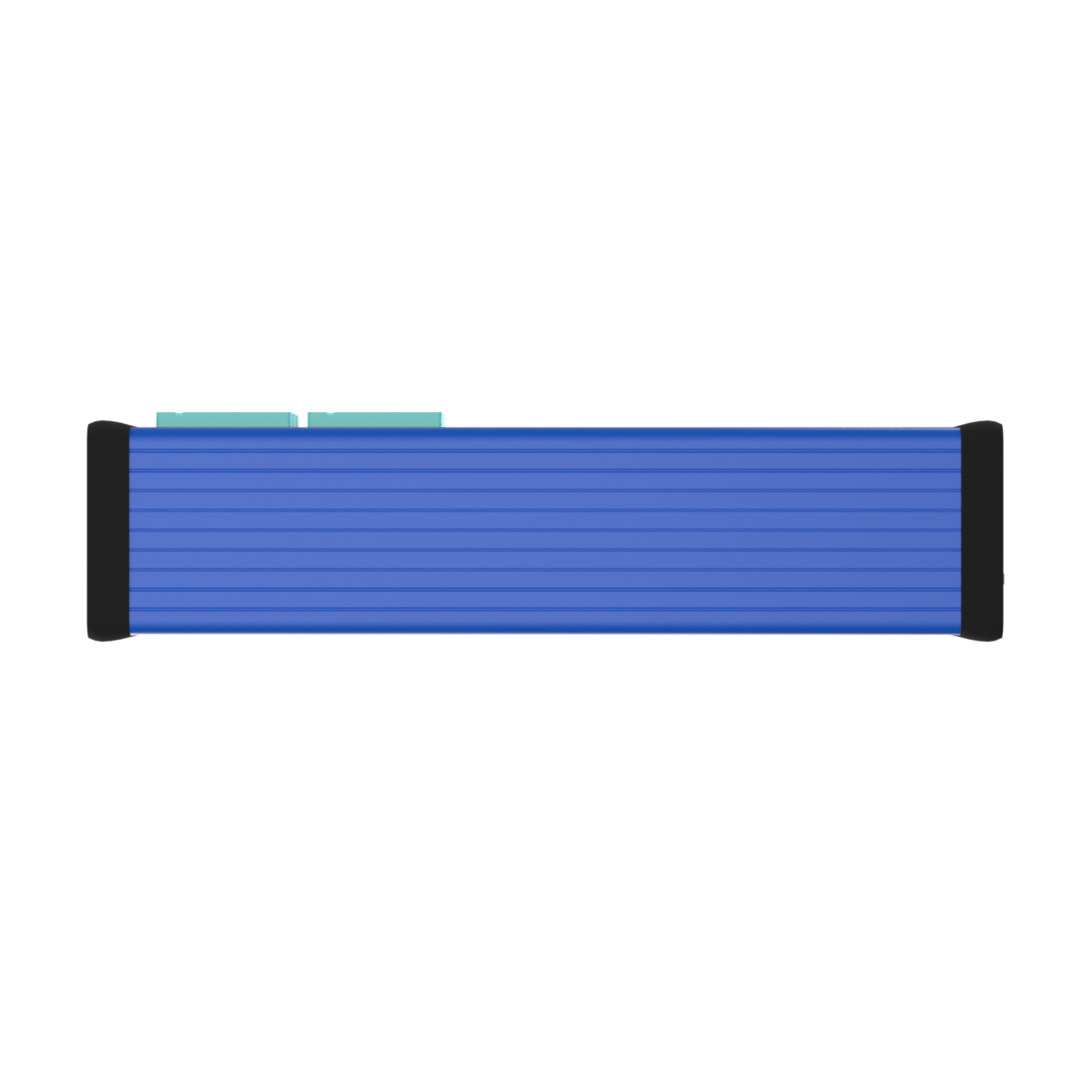
| Dimensions (W × D × H) | 233 × 129 × 60 mm | |
| Weight | 1.02 kg | |
| Compliance | CE, RoHS, REACH |
Included hardware
| Item | Qty | Notes |
|---|---|---|
| Accordion A2 unit | 1 | Pre-configured with the modules below. |
| ESH10000568 — MPIO-96 SPI Module | 1 | 96 reconfigurable channels, AD5592R-based. Installed in SO-DIMM slot T1. |
| ESH10000355 — 6× IDC N-TOP Breakout Module | 1 | 96-signal breakout to 6× IDC 20-pin. Installed in N-TOP slot N1. |
| USB-C power supply | 1 | 130 W, USB-PD. |
| USB-C power cable | 1 | 1 m. |
| Quick start card | 1 | Hostname, MAC, default settings. |
Channel summary (provided by the bundled modules)
| Parameter | Value |
|---|---|
| Total user channels | 96 |
| Channel type | Bidirectional, software-configurable |
| Modes per channel | Analog input, analog output, pseudo-digital I/O |
| ADC resolution | 12-bit |
| DAC resolution | 12-bit |
| Analog range | 0–5 V typical (AD5592R 2× mode) |
| Pseudo-digital thresholds | Programmable VL / VH per channel |
| Open-drain emulation | Supported (set VH < 0) |
| Floating-output emulation | Supported (set VL < 0) |
| High-speed acquisition | Supported, exposed via NumericResult channel |
| Calibration | Per-channel gain and offset, persistent on module |
| Max voltage / current at IDC pin | 5 V / 2 A |
| IDC pin-1 / pin-2 fusing | 0.25 A thermistor fuse (5 V / 12–20 V rails) |
| ESD on IDC connectors | IEC 61000-4-2, ±30 kV contact, ±30 kV air |
Lifetime licenses for Accordion Shell and Accordion Pilot are included. The Web API, the Python package accordionq2, and the .NET client AccordionQ2.WebApiClient are open clients and need no separate license.
Manual
Hardware
The unit is the standard Accordion A2 chassis with two pre-installed modules (MPIO-96 in SO-DIMM slot T1, IDC breakout in N-TOP slot N1). The 96 DATA signals from the MPIO-96 route directly to the IDC connectors J1–J6, 16 signals per connector.
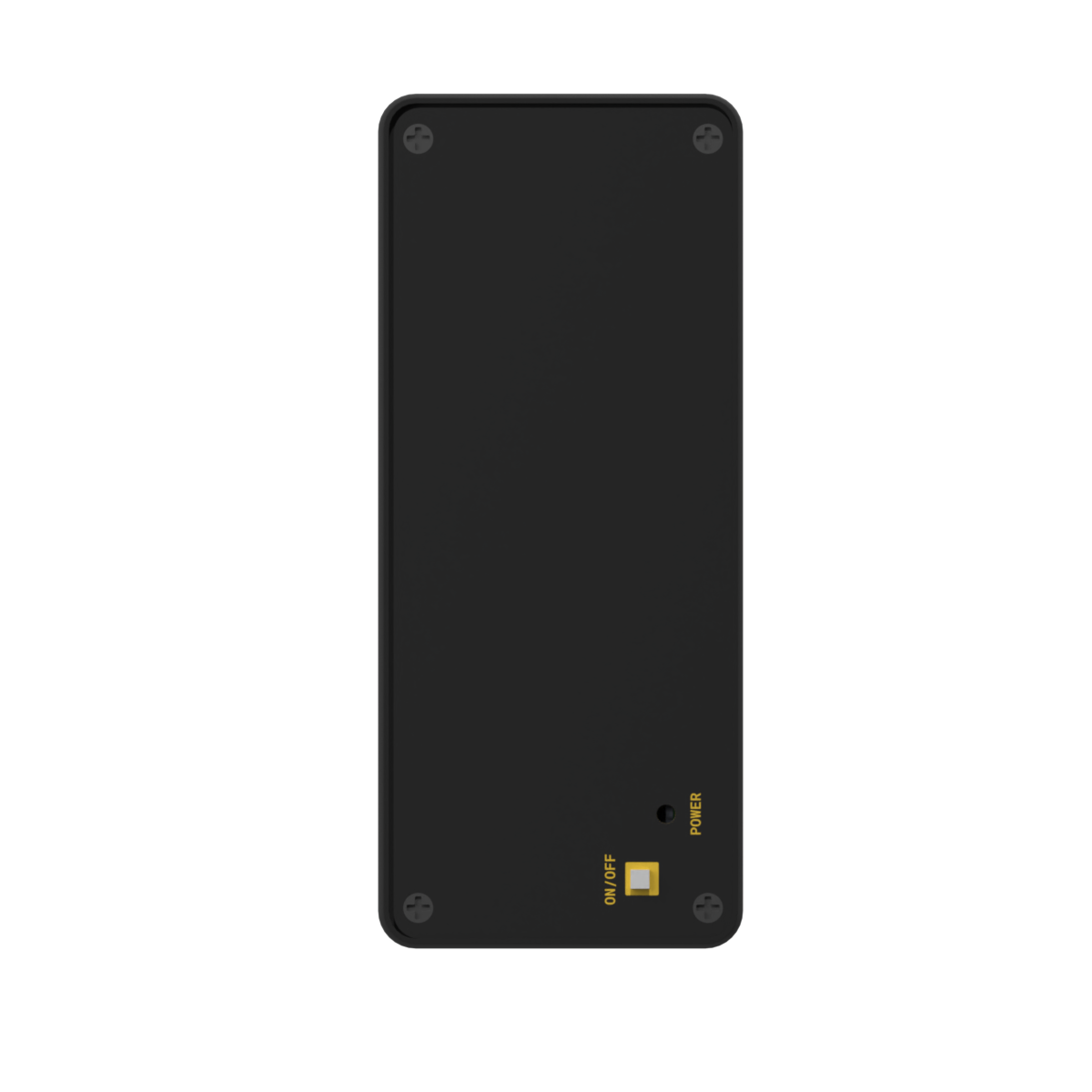
Power-on: connect the bundled USB-C supply to the POWER port, connect Ethernet to the control network, press the power button, and wait for boot. The unit is reachable by hostname (on the quick-start card) or DHCP IP.
Connecting a fixture: use standard 20-pin (2×10, 2.54 mm) IDC ribbon from J1–J6 to the fixture; verify pin-1 orientation before mating. Each connector exposes 16 signal lines, the 5 V rail (pin 1), the 12–20 V rail (pin 2) and GND. Per-pin signal limit 5 V / 2 A; pin-1/pin-2 rails thermistor-fused at 0.25 A. Power down before changing wiring.
Software
All interaction is over the Web API, optionally fronted by Pilot, Shell, the Python/.NET clients or TestStand.
- Pilot (GUI): install from https://esharp.blob.core.windows.net/accordionpilot/setup.exe, enter the hostname/IP and click Attach.
- Shell (CLI):
dotnet tool install -g AccordionQ2.Shell. - Python:
pip install accordionq2. - .NET:
dotnet add package AccordionQ2.WebApiClient.
Channels follow {ModuleIndex}.ESH10000568.MPIO{00–95} (e.g. 1.ESH10000568.MPIO42). All MPIO channels boot in INPUT mode — configure direction before driving. The IDC breakout is passive; its pins are addressed via the corresponding MPIO channel.
from accordionq2 import Pilot
pilot = Pilot(host="accordion-a2-lite-XXXX")
pilot.attach()
ch = pilot.get_channel("1.ESH10000568.MPIO00")
ch.configure(mode="analog_output")
ch.write_analog(2.500)
v = pilot.get_channel("1.ESH10000568.MPIO01").read_analog()
Pseudo-digital modes use VL/VH thresholds; set VH < 0 for open-drain emulation, VL < 0 for floating-output. High-speed synchronized sampling is exposed via NumericResult. Per-channel gain/offset calibration is stored on the module and applied automatically.
Pinout
Top — IDC signal connectors (J1–J6, on ESH10000355)
Six 20-pin (2×10, 2.54 mm) IDC connectors. Pin 1 is indicated by the connector chamfer and the marked ribbon wire.
| Connector | Signals (DATA[…]) | Mapped MPIO channels |
|---|---|---|
| J1 | DATA[0–15] | MPIO00–MPIO15 |
| J2 | DATA[16–31] | MPIO16–MPIO31 |
| J3 | DATA[32–47] | MPIO32–MPIO47 |
| J4 | DATA[48–63] | MPIO48–MPIO63 |
| J5 | DATA[64–79] | MPIO64–MPIO79 |
| J6 | DATA[80–95] | MPIO80–MPIO95 |
Pin 1 = +5 V and pin 2 = +12–20 V (both thermistor-fused at 0.25 A); pins 3–20 carry 16 DATA signals and GND returns. Back panel: RJ45 (NET), USB-C (POWER, bundled supply only), 4× USB-A. Front panel: power button.
Application notes, cases & news
Insights tagged for this product.
The right Accordion for your bench?
Tell us what you're testing and we'll find the right configuration — or say honestly if a standard setup is enough.